
If you don't work a standard 9-to-5 job, getting a home loan can feel like you're about to be cross-examined. Freelancers, contractors, sole traders, casuals and company owners often put off talking to anyone because they expect explaining their income to be a painful ordeal.
Here's the honest truth from someone who used to assess loans inside a bank: non-9-to-5 borrowers get home loans every day. The reason it feels hard is that different lenders have wildly different rules for the exact same income. Walk into the wrong bank and you hit a brick wall; match your setup to a lender whose policy fits and it's far more straightforward.
You don't need to translate your work into bank-speak before talking to a broker. Knowing which lenders will be easy or tricky for your type of income is my job.
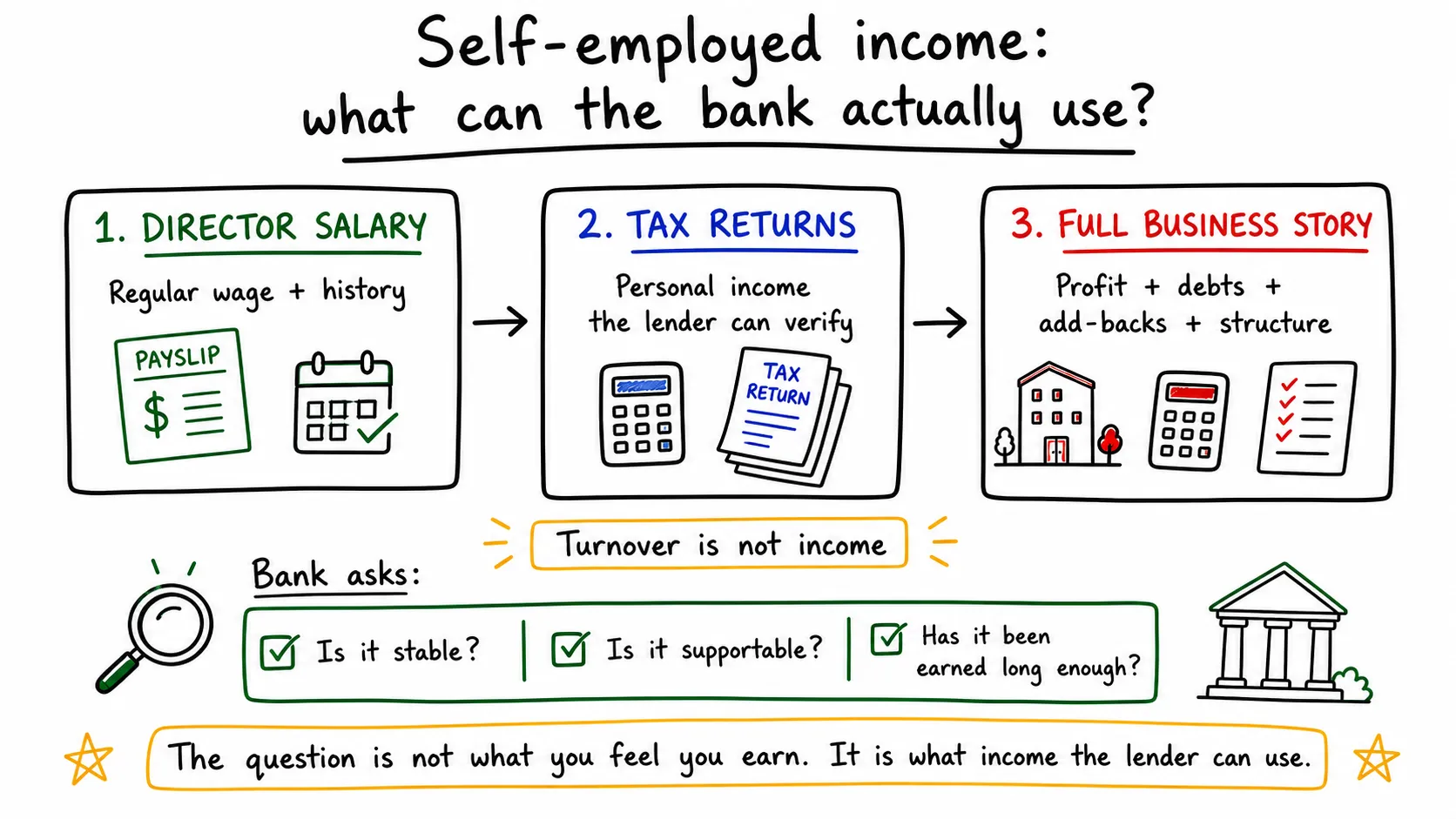
The bank is asking a slightly different question
For a permanent 9-to-5 employee, a lender mostly checks: are they employed, and what's on the payslip?
When you freelance, contract or run a business, the lender is checking: is this income reliable, how long have you been earning it, and does the business or contract actually support it? Even if you own a company and pay yourself a wage with regular payslips, a bank knows you control both sides of the equation.
Four common ways lenders assess non-9-to-5 income
1. Sole traders, freelancers and ABN contractors
If you invoice clients under an ABN, most lenders look at your personal tax returns and notices of assessment to see net profit after business expenses. Where lenders differ hugely is on how much history they want: some insist on two full financial years, while others may accept one year of returns (or shorter ABN history if you're in the same industry).
Day-rate and PAYG contractors are another classic policy split. Some banks treat a rolling 6-month contract like a red flag; others can annualise a day rate cleanly once they see your contract and industry track record. Casual workers hit a similar split on how many months of payslips a lender wants to see.
2. Director salary
If you operate through a company and pay yourself a regular wage, some lenders are comfortable using that salary without diving deep into every line of the business financials. The catch is history: you can't bump your own wage up a month before applying and expect every bank to count the higher figure. They want it to look consistent and supportable.
3. Basic self-employed assessment
Some lenders focus mainly on your personal tax returns and notices of assessment, using either an average of recent years or a single recent year where policy allows. That works well when your personal return tells a clear story, though it can be limiting if profit sits inside a company or trust.
4. Full self-employed assessment
For more complex structures, lenders open the full set of books: personal, company and trust tax returns, profit and loss statements, balance sheets, business debts, distributions, add-backs (such as depreciation or one-off expenses) and retained profits. The point isn't to punish business owners; it's to work out what real cash flow is available to service the loan.
The four traps that catch people out
The first is applying to your everyday bank just because your accounts are there. Your everyday bank might be one of the strictest lenders on the market for sole traders, contractors or one-year ABNs, even though another lender on the panel handles it cleanly.
The second is assuming your strongest year is automatically the one a lender uses. Some lenders take one year, some average two years, and some cap growth or take the lower year. Policy makes a massive difference here.
The third is forgetting about business debts. One lender may count a business vehicle lease or loan in full against your personal borrowing power, while another may exclude it if your accountant confirms the business is paying it. That single policy difference can shift borrowing capacity by a lot.
The fourth is assuming tax minimisation and borrowing power work together. They usually pull in opposite directions. Claiming every legal deduction saves tax, which is fair enough, but a lender can only use the income your documents verify under its policy.
A quick checklist before you talk to anyone
- How are you paid: ABN invoices, day-rate contract, casual payslips, director wage, profit or trust distributions?
- How long have you been working in this setup (and in this industry before that)?
- Is your income steady, climbing or bumpy across the last 1 to 2 years?
- Are there business debts or leases sitting in your name or your company's name?
- Are your latest tax returns lodged, or still with your accountant?
What to do before applying
If you're freelancing, contracting, working casual hours or running a business and thinking about buying or refinancing, check lender fit early, before you fall in love with a place or put an enquiry on your credit file.
Once we see what your numbers and documents show, we match them to the lenders that actually understand how you earn.