
If you are a first home buyer in Australia, someone has probably told you to get a credit card to boost your credit score before applying for a home loan.
Is that actually true? Do the banks really care?
The simple answer: no, you do not need a credit card to get a home loan. I have had clients approved who never held one. What the score does and does not do is worth understanding though, because people burn real energy on the wrong number.
What the banks actually care about
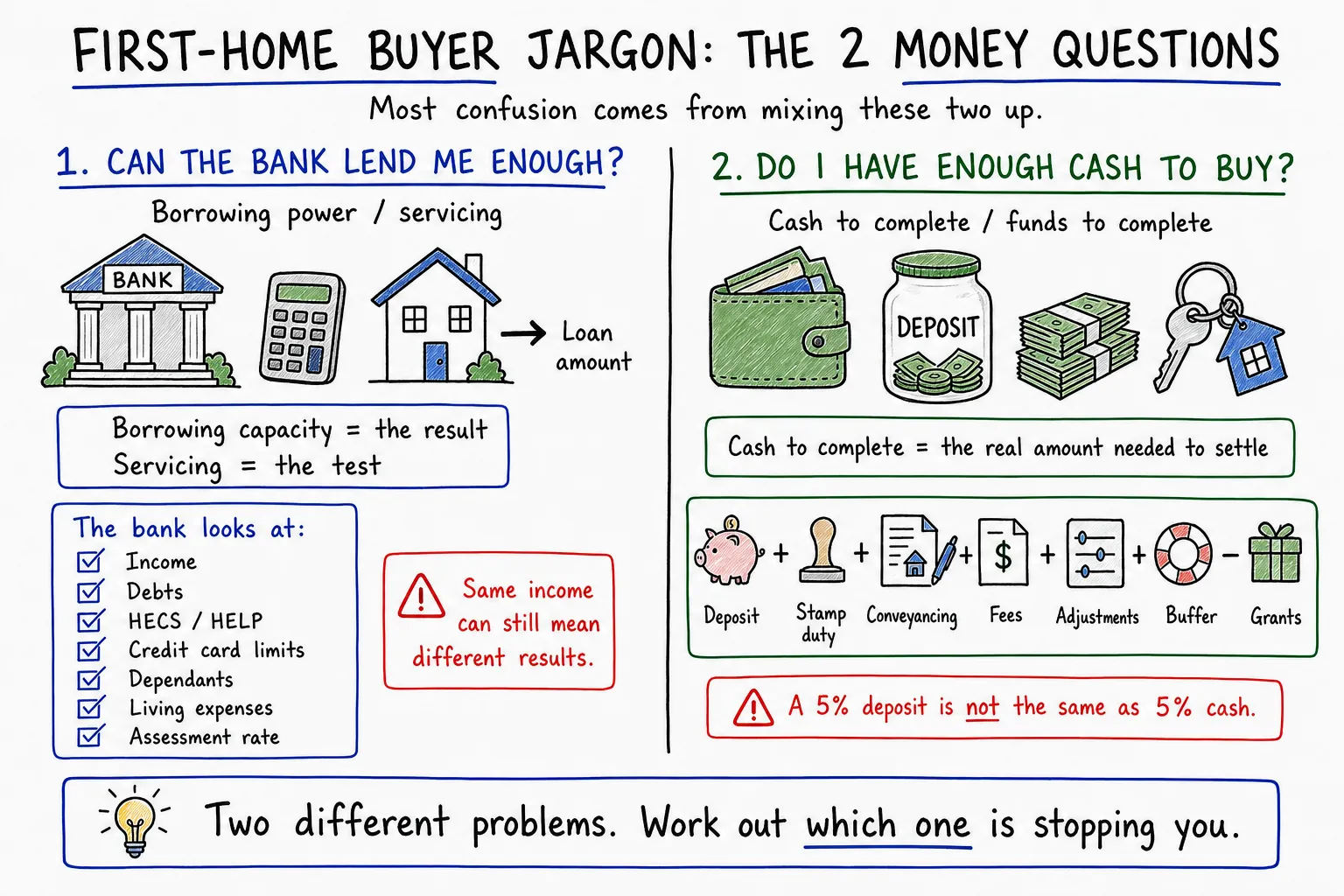
A home loan assessment ultimately turns on two questions. How does the lender get its money back if you do not repay? And can you afford the repayments?
That is where your deposit, your LVR and your income come into the equation, and where government schemes may help. Those are the factors worth your focus. Credit score is a supporting metric that sits underneath them, not a gate you need to grind up before you start.
What counts as a negative credit event
Pretty much what the name says: late repayments, a default on a loan, or in the most drastic case, bankruptcy. These are the entries on a credit report that make an assessor slow down.
How lenders treat them
When there is a negative event on the file, the lender usually wants the story behind it. Why was the repayment late? Was something outside your control?
A simple example: "I was a month late on my credit card because I changed bank accounts and a direct debit got missed." That is a fair explanation, and most assessors will be satisfied with it. A pattern of missed repayments with no story is a different conversation.
I have a low score. Can I still get a home loan?
Often, yes. Some lenders do have minimum credit score requirements, but plenty of others have options suited to people with lower scores or an imperfect history. In extreme cases, an ongoing pattern of defaults, it may be genuinely hard or not possible for a time. But the score alone is rarely the sole reason an application dies, and opening a credit card to farm points onto your score is not the fix.
Where credit score genuinely matters
Unsecured lending. Credit cards, personal loans, car loans. There is no property behind those debts, so your repayment likelihood is most of what the lender has, and the score carries real weight.
For home lending, the property secures the loan, so the score drops back to a supporting role. That is the whole reason the credit card myth is a myth: the advice is imported from a different kind of borrowing.
What to focus on instead
- Your deposit. How much you have and how it changes your LVR and costs.
- Your serviceability. Whether your income comfortably supports the repayments after your debts and expenses.
- Clean credit conduct from here. Repayments on time, direct debits that do not bounce, and not opening new debts you do not need in the months before applying.
What to do next
If your report is clean or has one explainable blemish, stop worrying about the score and put the energy into the two numbers that decide the outcome: deposit and serviceability. They are different problems, and it helps to know which one is actually yours. When you are ready to test the numbers properly, that is what pre-approval is for.