If you are buying your first home, the deposit question can feel strangely slippery. One person says you need 20 percent. Someone else says 5 percent can work. Then you hear about grants, stamp duty, lenders mortgage insurance, genuine savings, and suddenly the simple question has grown legs.
The clean way to think about it is this: your deposit is only one part of your buying position. A lender also looks at your income, expenses, credit history, employment, existing debts, and the property you want to buy.
The 20 percent deposit is the cleanest path, not the only path
A 20 percent deposit usually means you are borrowing 80 percent of the property's value. This is often called an 80 percent loan-to-value ratio, or 80 percent LVR.
At this level, many borrowers can avoid lenders mortgage insurance. It can also make the loan application simpler because the lender has a bigger buffer. But for many first home buyers, saving 20 percent plus costs can take years.
Lower-deposit options may be available
Some first home buyers may be able to buy with less than 20 percent. Depending on the lender, loan type and your circumstances, this could include options around 5 percent to 10 percent deposit. Some government pathways may also reduce the deposit barrier for eligible buyers.
The trade-off is that lower-deposit lending is more sensitive. Lenders will usually look closely at your savings history, income stability, expenses and overall risk. You may also need to factor in lenders mortgage insurance unless you qualify for a scheme or waiver that removes it.
Do not forget the costs around the deposit
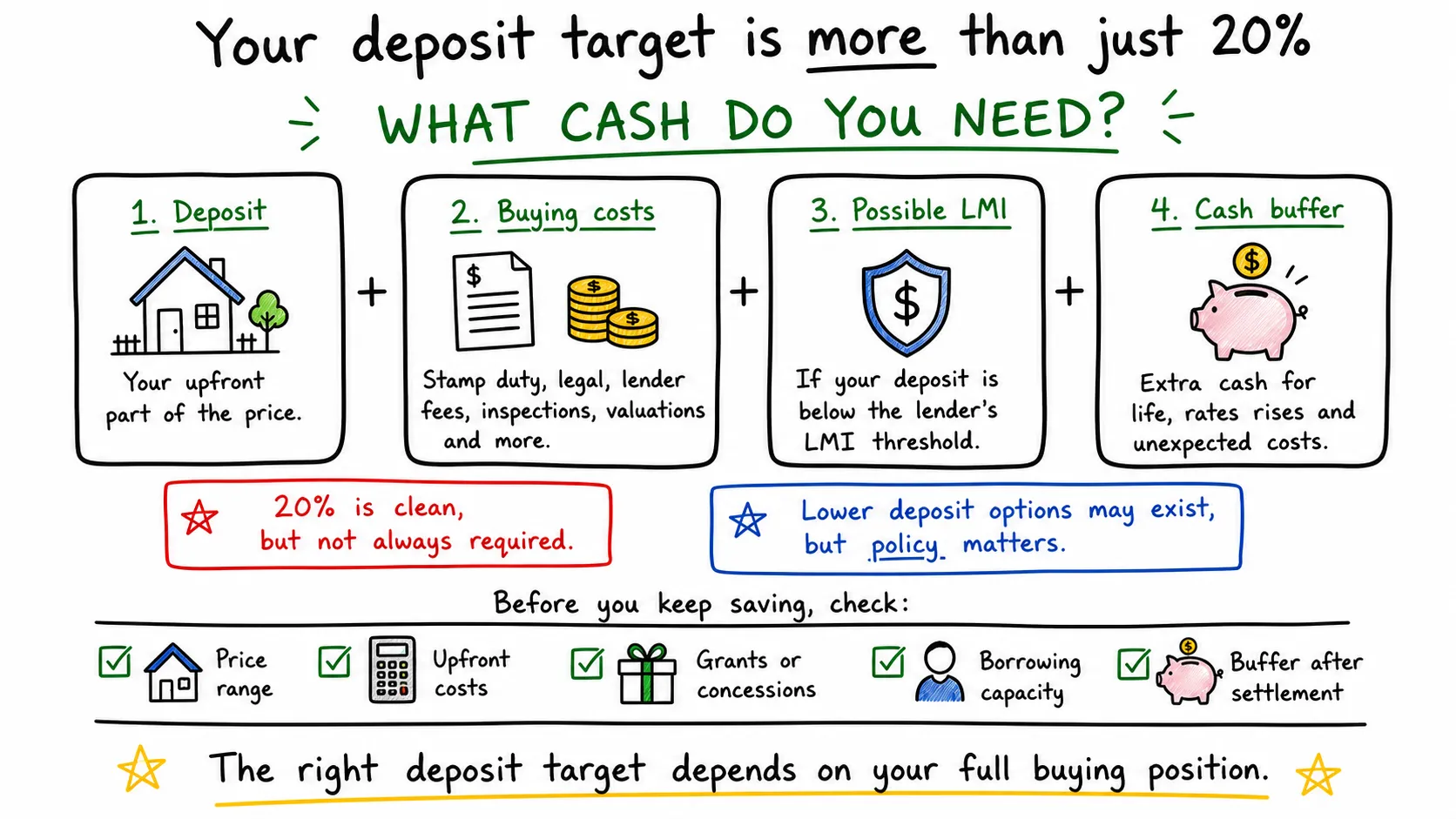
Your deposit is not the only money you may need. Buying a home can also involve upfront and settlement costs. These vary by state, property type and purchase price, but common examples include:
- Stamp duty, unless you qualify for an exemption or concession.
- Conveyancing or solicitor costs.
- Building and pest inspections.
- Loan application, valuation or settlement-related fees.
- Moving costs and a cash buffer after settlement.
This is why two people with the same deposit can have very different buying positions. If one person qualifies for concessions and the other does not, their required cash contribution may look completely different.
A practical deposit checklist
Before you decide how much longer you need to save, it is worth checking the full picture:
- What price range are you realistically targeting?
- How much have you saved, and how much of it is genuine savings?
- What upfront costs apply in your state or territory?
- Could you qualify for first home buyer support?
- Would lenders mortgage insurance apply?
- How much cash buffer would remain after settlement?
- Does your borrowing capacity support the property price you want?
When should you speak with a broker?
You do not need to wait until you have the perfect deposit. In fact, speaking with a broker early can help you avoid saving toward the wrong target.
A useful first conversation can map your deposit, borrowing capacity, likely upfront costs, possible concessions, and lender options. From there, the target is less about a generic percentage and more about what actually works for your situation.